Static content is safe. Personalized content is profitable.
The era of the one-size-fits-all website is fading. Today, relevance is the primary driver of conversion. However, implementing personalization in a headless architecture is significantly harder than simple content delivery.
It requires three things to happen in milliseconds:
- Data collection: who is this user?
- Decisioning: what should they see?
- Delivery: rendering the content
Most headless CMS platforms only handle the delivery part. This forces you to glue together CDPs, personalization engines, and middleware, creating a complex and fragile stack.
Here is a strategic look at the market to help you choose the right architecture.
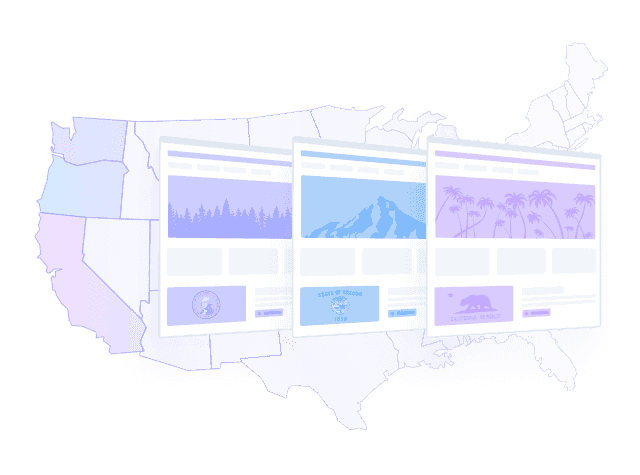
Create and publish personalized experiences without replacing your CMS or over-relying on your developers.
Key considerations
Before choosing a vendor, understand the trade-offs in architecture and take a closer look at the workflows.
Real-time vs. Static
Can the CMS change content based on current session behavior (for example, for users who just clicked something), or does it rely on pre-cached segments?
Data Logic
Where does the user data live? A CMS with a built-in real-time CDP significantly simplifies segmentation compared to integrating and syncing with an external data silo.
Granularity
Can you personalize a specific component (like a hero banner), or do you have to redirect the user to a completely different page URL? Can you personalize multiple components at multiple pages at once, to keep the communication consistent?
Latency
Does the personalization render on the server (fast) or in the client's browser (slow)? How long does it take to load? Does it take into account last-click data?
The best headless CMS options for personalization
We categorized market leaders by their approach to personalization.
1. Native personalization engines
These platforms combine the CMS and the decision engine, offering the fastest time-to-market.
-
Croct
We designed Croct to be the engine for personalized experiences. It includes a real-time native CDP that tracks user behavior and modifies content components on the server side. This eliminates the flicker effect and removes the need for complex middleware.
-
Prepr
Similar to Croct, Prepr offers built-in personalization features, allowing you to segment audiences based on behavior and interests without needing an external CDP.
-
Contentful
The enterprise market leader for structured content. Contentful recently acquired Ninetailed, one of its plugins, to offer personalization as a feature.
-
Optimizely
A hybrid enterprise commerce CMS/DXP, Optimizely offers robust, native personalization and experimentation features.
2. Composable DXPs
These platforms act as the "glue" between your CMS and other tools.
-
Uniform
Until a while ago, Uniform was not a CMS itself but a "visual workspace" that connects headless CMSs (such as Contentful or Sanity) to personalization logic. It is a solution for enterprises that want to keep their existing stack but add a personalization layer on top.
3. Traditional headless with integrations
Great for static content, but heavy lifting is required for personalization.
-
Storyblok
Popular for its visual editor. While it doesn't offer personalization natively, Storyblok has a strong integration with Croct. It enables dynamic content out of the box without relying on developers, since the one-time integration applies to all blocks, and also brings an analytics layer directly to the CMS.
Here you can find a demo project using Storyblok and Croct for AB testing and personalization.
-
Strapi
Popular in the open source community, Strapi is a flexible, API-first CMS that allows developers to serve different content variations via REST or GraphQL easily. It supports personalization by managing multiple content versions and integrating with tools like Croct for experimentation, or custom solutions.
Here you can find a demo project using Strapi and Croct for AB testing and personalization.
-
Sanity
A favorite among developers for its content lake approach. Personalization usually requires custom engineering or the use of their plugin, which demands significant setup and code maintenance.
Here you can find a demo project using Sanity and Croct for AB testing and personalization.
The verdict
If you are building a static blog, any headless CMS will do.
But if you are building a dynamic application where context matters, choose a solution that processes data and content in the same place.
Reducing the distance between knowing the user and serving the content is the only way to deliver true real-time personalization at scale.